11 Years of Growth: CHS Dean Reflects on Career Ahead of Retirement
Jan 21, 2026
By Hayden Gooding
UKNow
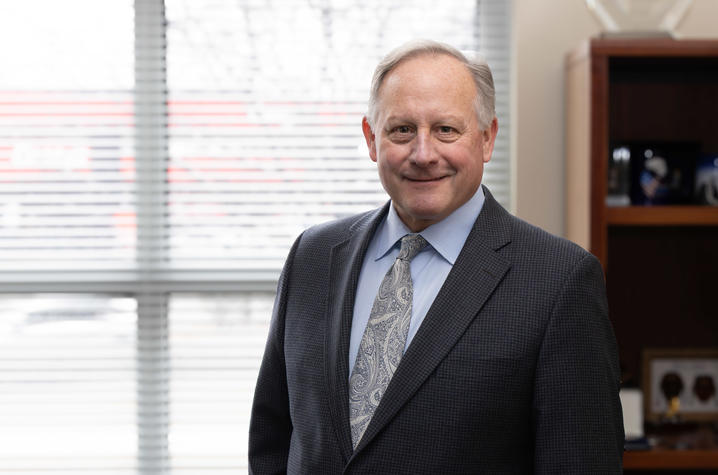
LEXINGTON, Ky. (Jan. 14, 2026) — During each Commencement ceremony, as graduates cross the stage and families cheer from the stands, University of Kentucky College of Health Sciences Dean Scott Lephart, Ph.D., is reminded why he chose to take on a leadership role at UK.
This spring, he’ll have one last chance to watch his students graduate.
After serving 11 years at UK, Lephart will attend his final Commencement ceremony in May as he closes a chapter defined by growth, trust and lasting impact.
Lephart didn’t come to UK to simply maintain what existed. He committed to building something that could not be ignored. Now, as the college continues to expand, Lephart’s retirement marks a moment to reflect on how vision and collaboration reshaped the college and is strengthening health care across Kentucky.
A reluctant leap that changed everything
Before taking on the dean position at the UK College of Health Sciences, Lephart was at the University of Pittsburgh for 27 years. He served as distinguished professor and chair of the Department of Sports Medicine and Nutrition in the School of Health and Rehabilitation Sciences.
“I had no interest and wasn’t looking for a new position,” Lephart said. “I loved Pittsburgh the entire time I was there.”
After several conversations with Michael Karpf, M.D., former UK executive vice president for health affairs, President Eli Capilouto and others across the university, Lephart decided the opportunities here were worth the risk.
“Scott Lephart was an outstanding addition to the University of Kentucky and to the Commonwealth at large,” President Eli Capilouto said. “At a pivotal moment for the College of Health Sciences, he brought national distinction, credibility and a bold vision for how the college could grow in service to students, faculty and the Commonwealth. Just as importantly, he understood how to build trust and momentum across campus, creating the conditions for lasting growth. From the start, it was clear he was the right leader at the right time.”
Lephart made the choice to come to UK and help transform the College of Health Sciences.
“At the end of the day, the reason that I wanted to come here was to make this college indispensable, which meant we had to work together to make some changes,” Lephart said.
Building the gateway to health professions
The College of Health Sciences hosts both undergraduate and graduate health care professional programs. When Lephart began his journey with the college, there were great things happening, but the college was small.

“Based on the confidence that I was given from Dr. Karpf and President Capilouto, I felt that they would provide an opportunity, a platform by which I could help grow this college,” Lephart said. “I was determined to grow the programs that were here, start new programs and encourage the faculty to become more productive researchers.”
He set out to create a more robust college. The first step was to grow the undergraduate programs so students could stay within the College of Health Sciences for undergraduate studies and then transition to their health care professional program all within the same college.
Lephart rebranded the college as the “gateway” to the health care professions. The college leadership team created undergraduate preparatory coursework for students entering graduate programs in physical therapy, athletic training and physician assistant studies.
“We recruit students to come into these programs as undergraduate freshman who want to go to a graduate school program like physician assistant studies or physical therapy,” Lephart said. “Now the College of Health Sciences is the place to do it. This design has been extraordinarily successful.”
The college created an intentional pathway for undergraduates to transition to their professional programs and from there become part of the health care workforce.
“In leading the largest department in the college, which comprises Medical Laboratory Sciences, Clinical Leadership and Management, and Human Health Sciences, we are so thankful for the support from Dean Lephart,” said Sarah Kercsmar, Ph.D., chair of the Health and Clinical Sciences department. “We’ve grown in numbers, we’ve grown in resources, and we’re better able to serve the Commonwealth due to his leadership. In addition, we’re creating more options and opportunity for students. We are now truly a gateway for even more students to serve the health care needs of the Commonwealth.”
Kercsmar, who was elevated to chair in 2024, also said Lephart provided an example to follow.
“Personally, as the newest chair in the college, I’ve had a lot of on-the-job training over the last couple of years, and Dr. Lephart has been a great sounding board and mentor,” Kercsmar said. “I’ve learned what it means to lead.”
Research serving Kentucky and the country
Another goal Lephart set out to achieve when he joined the college was to help faculty grow their research portfolios. From his experience at the University of Pittsburgh’s Department of Sports Medicine and Nutrition, he knew UK would benefit from having a research institute specifically dedicated to areas that the College of Health Sciences serves.
In 2017, the college established the UK Sports Medicine Research Institute (SMRI), hosted in the College of Health Sciences and supported in part by grants from the U.S. Department of Defense.
“SMRI is my baby,” Lephart said. “When it launched, we brought five people with us from Pittsburgh. We worked with the athletic department to get a space and UK HealthCare invested a lot of money in us. We brought our grants and our people.”
SMRI conducts research into injury prevention and performance optimization for professional and collegiate athletes, the tactical athletes of the U.S. military and physically active people of all ages in Kentucky.
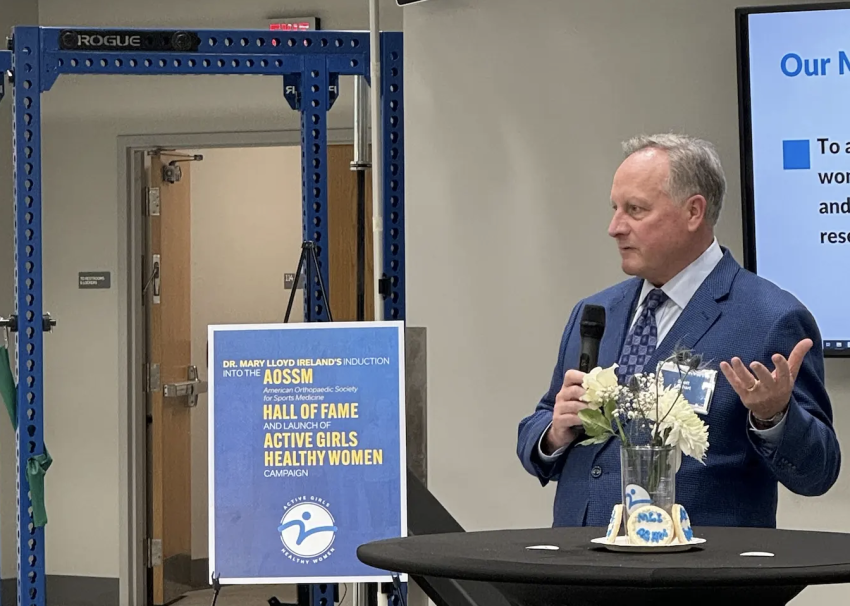
Today, with the help of Lephart’s leadership, the institute is made up of more than 40 researchers and SMRI has received $40 million in research grants, of which $30 million are currently active.
“That is significant,” Lephart said. “There is a lot of opportunity for SMRI to do even more in the future. I’m really proud of the group at SMRI, the leadership and the faculty over there. Full-time faculty has tripled and to see that growth is really exciting.”
One of the research areas SMRI covers is United States military active duty and veterans. This initiative works with the Department of Defense to take care of Navy SEALs, and special forces units in the Army, Air Force and Marine Corps.
SMRI researchers study their injuries and identify how they can mitigate and decrease the risk of injuries that are very similar to what is seen in the sports world. The work here impacts national security; it increases the force protection for the U.S.
For those who worked alongside him, Lephart’s vision for SMRI served as a foundation for both the institute’s expansion and the professional growth of its researchers.
“Dr. Lephart has left a lasting impression and impact on many lives in our college and on this campus,” said Nick Heebner, Ph.D., SMRI director. “Promptly after arriving to UK as the dean of Health Sciences, he worked to found SMRI with a vision to make UK a leader in sports medicine and military health. He has done just that. What started as a small team of researchers is now a large research center, and we all look forward to carrying on this vision. Dr. Lephart has also been one of the most influential people in my professional career. I began on my path in research working under him and his lab as a graduate student nearly 17 years ago. Even though our roles and research projects have changed over these years I’m still lucky to call him a mentor.”
In addition to building SMRI, Lephart also knew it was important to help build up research in all departments across the college.
“Under Dr. Lephart’s guidance, research in Health Sciences has been transformed and grown exponentially in the past 11 years,” said Brian Noehren, Ph.D., associate dean for research in the College of Health Sciences. “For example, he had the vision to emphasize scholarship, helping many of our faculty with less time for research feel part of the process and achieve recognition for their important work. The growth in federal research program dollars has been nothing short of remarkable with grant expenditures more than doubling since he has been the dean.”
Noehren said he always looked up to Lephart.
“On a personal note, he has been an incredible leader, somebody who I trust and admire,” Noehren said. “He is always thinking about how to best help myself and the rest of the faculty advance the mission of the college.”
Strengthening partnerships to meet workforce needs
A strong partnership with UK HealthCare was an essential element of the growth plan Lephart created. Not only is the college a gateway to health professions, it’s also a gateway to UK HealthCare and providing the highest quality care to the Commonwealth.
It was crucial to work together, strengthen the partnership with UK HealthCare and fully collaborate the entity with the graduate programs and research at the college.
“I think we’ve created an opportunity where we now are valued by our colleagues,” Lephart said. “People recognize what the College of Health Sciences is and the value that this college and our graduates contribute to the health care of Kentucky and the country.”
The successful growth of the college was evident when it received the invitation in 2021 to be part of the new Michael D. Rankin MD Health Education Building. In early planning periods, the building primarily was going to be for UK’s College of Medicine, but after leadership teams evaluated the purpose of the building, it was clear that the College of Health Sciences needed to be involved, along with the Colleges of Nursing and Public Health.
State legislators have the goal for UK to be responsible for training health care professionals to address the shortages and health disparities across the state. In addition to the physician workforce shortage, there’s also a shortage across other health care provider domains, many of those offered through the College of Health Sciences.
“If you look at the programs we offer, all of those are graduating providers to meet the shortage that we have,” Lephart said. “Physical therapy, physician assistants, speech-language pathology, audiology, athletic training and medical laboratory scientists. We’re the ones that prepare and train these providers.”
The college can now grow those programs because the Rankin Health Education Building will have larger spaces and new labs allowing for more students and faculty.
“It’s all come a long way in my 11 years,” Lephart said. “Now we're looking at this nine-story building, and we’re going to be in there collaborating with the Colleges of Nursing, Medicine and Public Health. It’s a game changer. We’re going to have the best faculty, enroll more students and ultimately graduate more students that go out and take care of the Commonwealth.”
A legacy of leadership
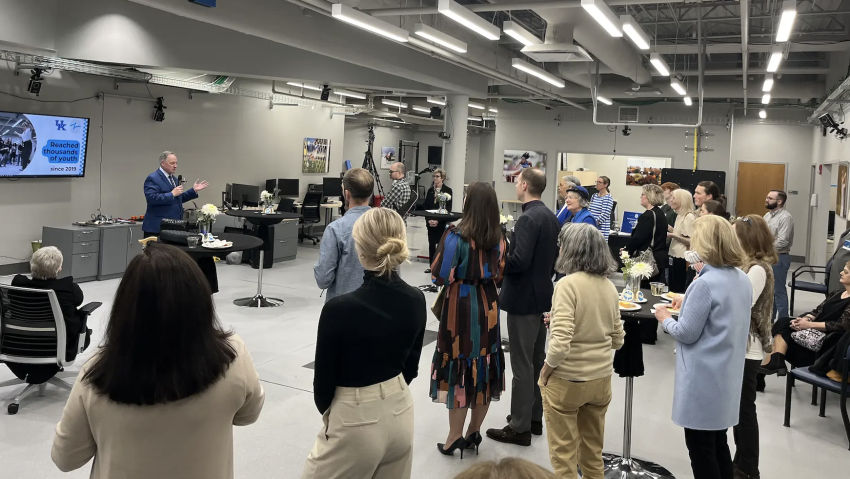
As Lephart begins the final semester of his career, he reflects on the university maintaining a strong, positive, empowering culture amid the rapid growth of the college.
“I have a lot of confidence in our department chairs, and I don’t get in their way. They’re the experts,” Lephart said. “We hire good people and good people develop great programs. Our president says that organizations become great if they have infrastructure and talent. We have space, resources and talent. Altogether that makes up a strong college.”
Other than the opportunities for growth, Lephart was attracted to UK because of the people.
“The culture has always been great; people really like each other here. Everyone who works here is enthusiastic about UK and proud of this school being the university for Kentucky,” Lephart said. “What we’ve been able to do is provide opportunities to grow within this college without negatively impacting that wonderful culture that was here when I arrived.”
He knows when students cross the Commencement stage that they’ve had wonderful faculty and staff, received valuable degrees and they are going to go out and do meaningful things in the world.
"Serving on Dean Lephart’s leadership team has been a privilege and has given me a deep appreciation for the compassion, vision and innovative, collaborative spirit he brings to the college,” said Karen Badger, Ph.D., vice dean and professor in the College of Health Sciences. “His leadership has positioned us for future success and strengthened our ability to meet the health care needs of the Commonwealth. He has consistently created space for people to be heard, valued and included in shaping the direction of the college. His commitment to delivering high‑quality education, advancing innovative research, supporting patient‑centered health care and empowering us to fulfill this mission will remain a defining part of his legacy.”
Lephart said he has many people to thank for making his time at UK meaningful. As he looks back at the goals he originally set for the college he smiles, feeling accomplished and proud of everyone who has been a part of the journey.
“There’s always more you want to get done,” Lephart said. “But when I go back to the challenges we identified and goals set, I can now say that we’ve addressed and achieved most of those, and it’s a good feeling. We’re a much more robust college. We’ve increased our enrollment almost double in the last 11 years. We’re graduating more students. Our research portfolio has expanded significantly. Those are critical accomplishments.”
Lephart’s decision to bring his expertise and vision to UK proved transformative, strengthening the university’s national reputation and leaving a legacy that will continue to shape research, education and leadership for years to come.
“Through Dean Lephart’s leadership, the College of Health Sciences expanded opportunity, strengthened partnerships across our academic health enterprise and helped advance our mission to address critical health care needs in Kentucky,” Capilouto said. “Leadership and progress are always shared endeavors, built on trust and a belief in what’s possible. We are deeply grateful for his service and for the strong foundation he leaves for the future.”
Summing up his time at UK, he knows he made the right decision choosing to join the College of Health Sciences.

“I’m thankful,” Lephart said. “I didn’t realize that I would be as thankful that I came here, spent 11 years here, and leave very happy. You know, every day is meaningful. This is a wonderful place.”
As the state’s flagship, land-grant institution, the University of Kentucky exists to advance the Commonwealth. We do that by preparing the next generation of leaders — placing students at the heart of everything we do — and transforming the lives of Kentuckians through education, research and creative work, service and health care. We pride ourselves on being a catalyst for breakthroughs and a force for healing, a place where ingenuity unfolds. It's all made possible by our people — visionaries, disruptors and pioneers — who make up 200 academic programs, a $476.5 million research and development enterprise and a world-class medical center, all on one campus.