One More Shot: Foundation Shares Life-Saving Lessons with AT Students
Jun 16, 2026
By Ryan Clark
CHS Communications Director
When Kim and Matt Mangine Sr. walk into a classroom, they carry more than a presentation.
They carry the memory of their son.
In June 2020, Matthew Mangine Jr., a 16-year-old high school soccer player from Northern Kentucky, collapsed and died during conditioning drills at soccer practice after suffering a sudden cardiac arrest.
In the years since, the Mangines have transformed unimaginable grief into advocacy.
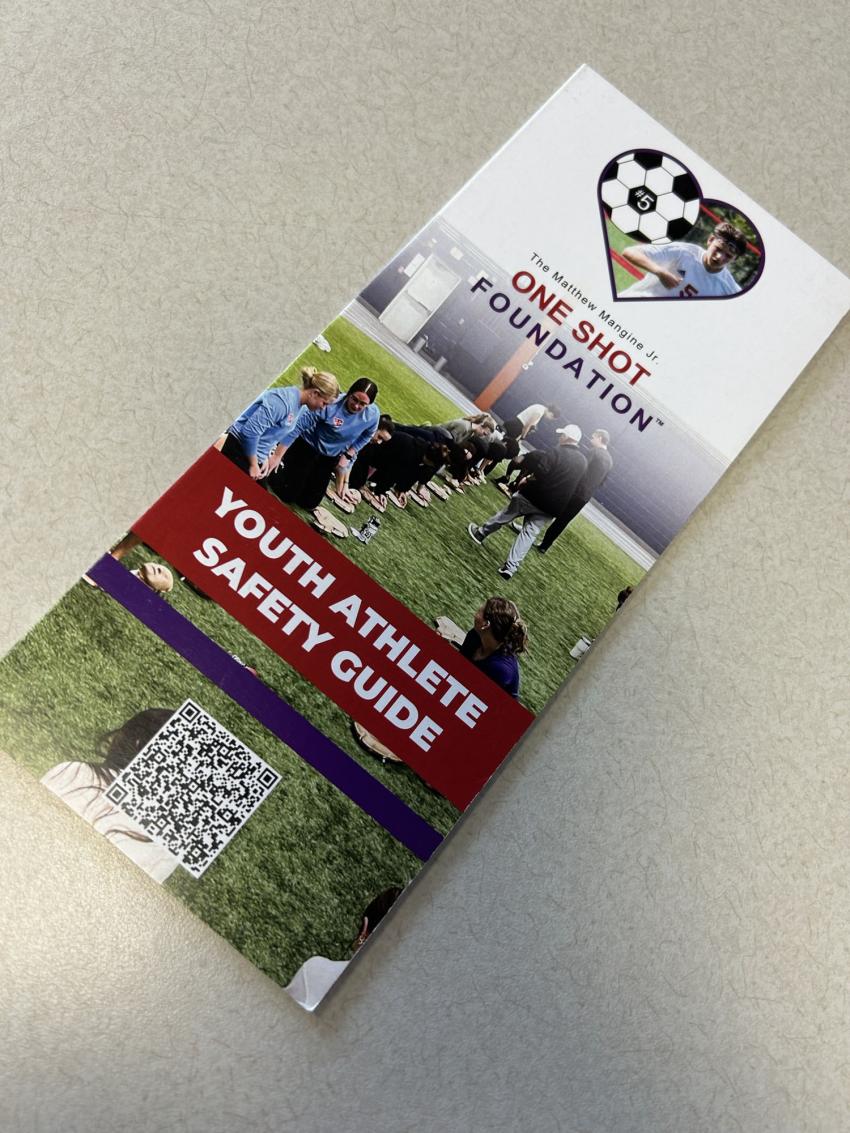
Through the Matthew Mangine Jr. One Shot Foundation, they travel across the country sharing Matthew's story and working to prevent similar tragedies through education, improved emergency preparedness and increased access to life-saving equipment. As they say, you have One Shot to save a life.
This week, that mission brought them to a classroom inside the University of Kentucky’s College of Health Sciences.
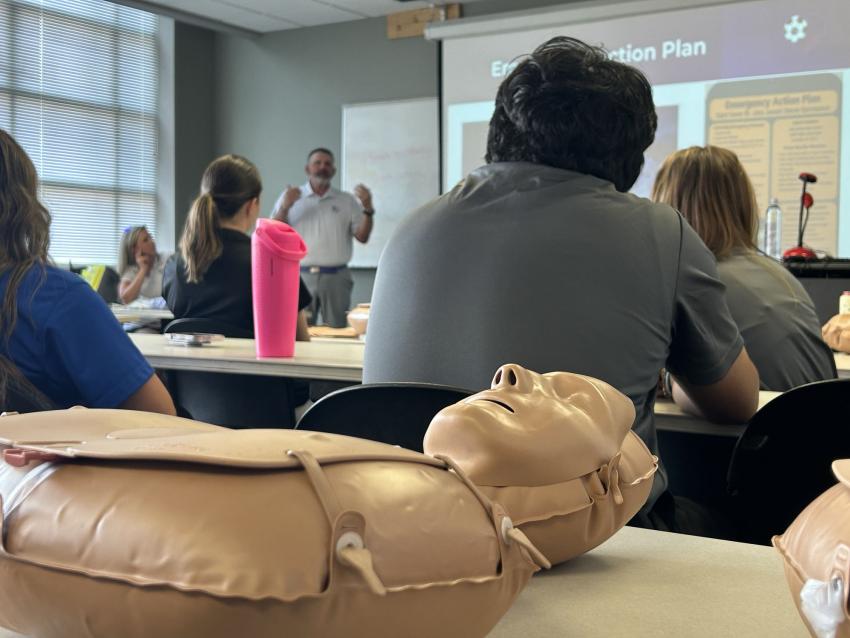
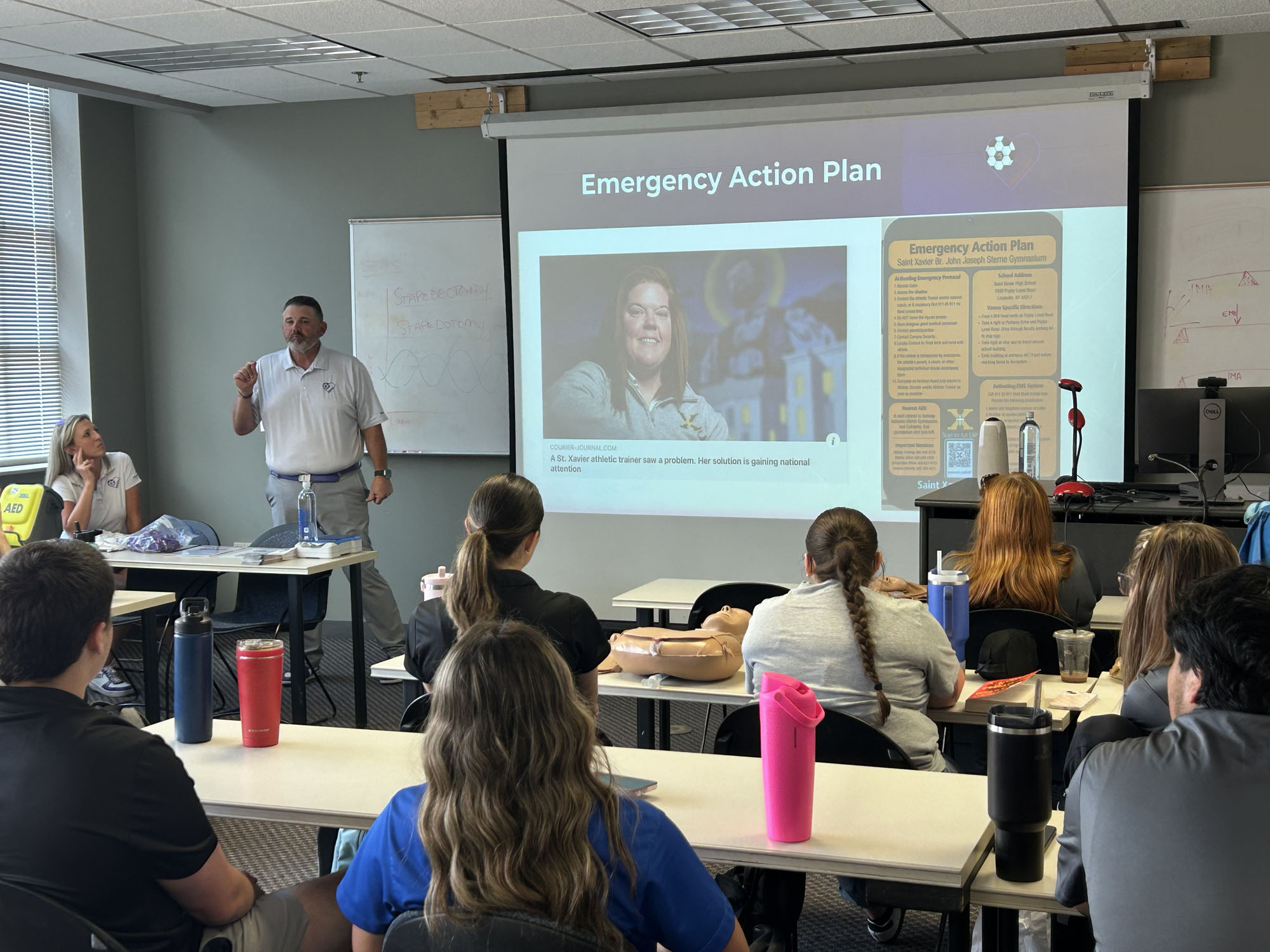
More than a dozen students enrolled in Athletic Training 633 — Clinical Integration: Assessment and Management of Life-Threatening and Emergency Conditions during Physical Activity, gathered in a classroom in the Wethington Building to hear firsthand how preparation and swift action can mean the difference between life and death.
“This connects directly with AT 633, where students are learning emergency skills that require preparation, quick decision-making, and accurate response,” said Matthew Smitley, DAC, ATC, and assistant professor in the Professional Master of Athletic Training Program. “I think this visit will help our students see that these situations are not theoretical; they involve real people, families and consequences.”
The One Shot Foundation was established with a mission to promote awareness, education and medical safety measures related to cardiac emergencies in competitive youth and high school sports.
For the Mangines, that mission rests on three essential pillars.
“One — screening, two — equipment, and three — preparedness and EAP,” Matthew Mangine Sr. told students, referring to Emergency Action Plans. “If you have all three of these pillars, you are set up for success.”
He noted that this summer, Florida is set to become the first state to require athletes to receive one mandatory EKG heart screening each year. And in Japan, he said, electrocardiogram screenings for all students begin in the fourth grade and continue through high school.
But even with screening efforts, cardiac emergencies can still happen.
“A lot of times, the first sign of a cardiac issue is collapse,” he said.
That reality underscores why preparedness remains at the center of the foundation's message. “Preparedness is, at the end of the day, the key to all of it,” Kim Mangine said.
The couple encouraged future athletic trainers to approach emergency planning with the same diligence they bring to other aspects of patient care.
They advised students to stay current with schedules, review and practice Emergency Action Plans at the start of every athletic season and ensure emergency equipment is ready for use.
“Most injuries occur in the first three weeks of practice,” Kim Mangine said.
She emphasized the importance of gaining support from school leaders to prioritize emergency preparedness.
“It’s about getting the buy-in from the administration and making sure it’s enforced,” she said. “We can help — we can show our video. That’s why we did this. It’s reality.”
The Mangines also challenged students to think critically about the questions parents and community members should ask when evaluating the safety of youth sports programs, like:
- Is there an automated external defibrillator, or AED, nearby?
- What is the Emergency Action Plan?
- Are athletic trainers available?
- Where is the closest hospital?
The Mangines said only 64 percent of Kentucky high schools currently have access to an athletic trainer.
And the classroom visit concluded not with discussion, but with action.
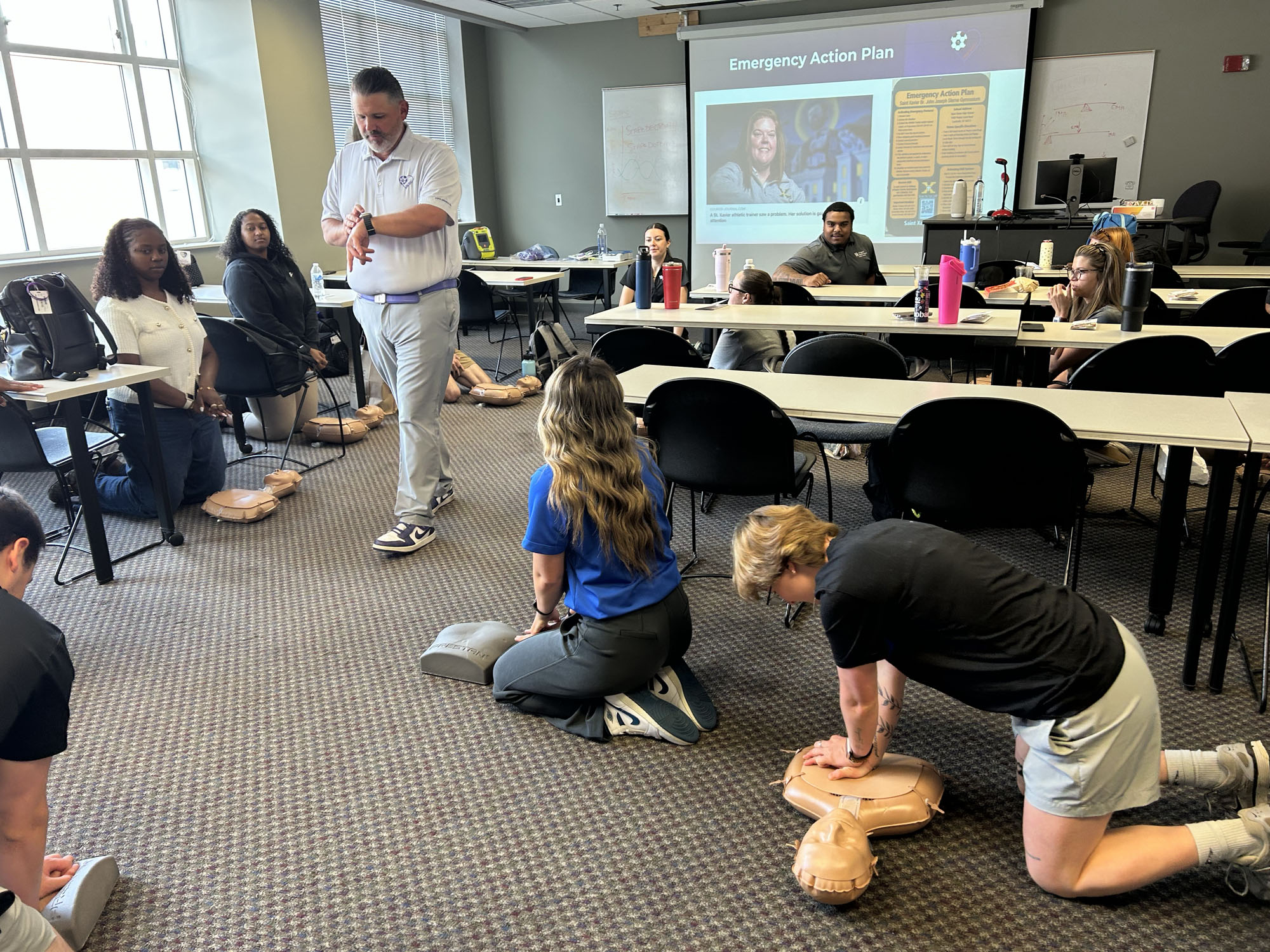
Students participated in Take10 training, a free, hands-on bystander CPR program designed to teach compression-only CPR in just 10 minutes. The training requires no mouth-to-mouth resuscitation and focuses instead on maintaining blood flow until emergency medical responders arrive.
The program teaches participants the “Three C’s” of responding to sudden cardiac arrest: Check to see if the person is responsive, Call 911 immediately and locate an AED, and Compress by placing hands in the center of the chest and pushing hard and fast at a rate of 100 to 120 compressions per minute.
For the athletic training students who will soon step onto sidelines, into training rooms and onto playing fields, the lessons extended far beyond a classroom exercise, Smitley said.
“It was powerful for our students to hear directly from a family impacted by the types of emergency scenarios we teach and prepare for in our program,” Smitley said. “In class, these situations can sometimes feel distant or theoretical, but the Mangine family made the responsibility feel real and immediate. This visit reinforced that effective emergency response often comes down to simple, intentional actions done well: Having a clear emergency action plan, practicing it regularly, making quick decisions, and applying an AED within the critical window.”
The students agreed.
“I thought the Mangine Family One Shot Foundation presentation and demonstration was both very moving and extremely practical,” said Megan Losey, a second-year graduate Athletic Training student from Plymouth, Mich. “Through their efforts and travel across the country teaching CPR and AED use, they are empowering coaches, healthcare providers, students, and community members with the skills and confidence needed to respond effectively during sudden cardiac arrest events … Athletic trainers play a critical role in emergency situations that being prepared can ultimately save someone’s life.”
For more information:
Matthew Mangine Jr. "One Shot" Foundation
One Shot Foundation website
Take10 CPR Training (compression-only CPR education)
Take10 CPR program information