Spring Break a Time to Learn and Give Back
Mar 26, 2026
By Ella Rosner
CHS Contributor
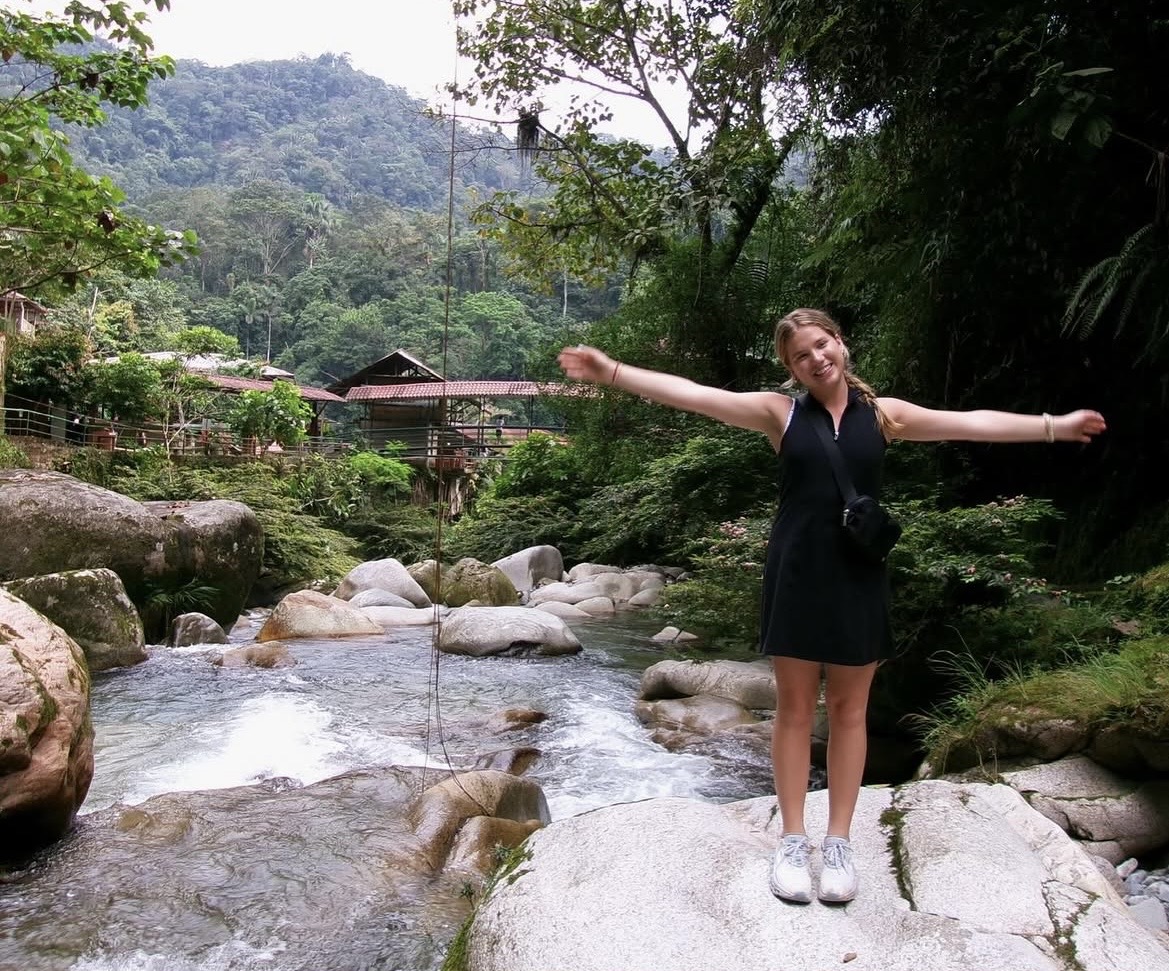
A native of Appleton, Wisc., Ella Rosner is a senior Human Health Sciences major on the pre-PA track. For Spring Break this year, she was able to visit Ecuador as part of the Shoulder to Shoulder Global (STSG) Health Brigade through UK’s Education Abroad and Exchange program. These are her thoughts on the trip:
When I decided to apply to Shoulder to Shoulder and embark on a medical brigade to South America, I had no idea what I was getting myself into.
Representatives from Shoulder to Shoulder spoke in one of my classes last year, and I had heard of the organization from a few friends who attended in the past. With that, I spontaneously decided to apply, not knowing anyone going on the trip. When I found out I got in, I admit I was intimidated to travel out of the country, and it felt like I was taking a leap of faith. Little did I know Ecuador and its people would leave such a significant mark on my heart.
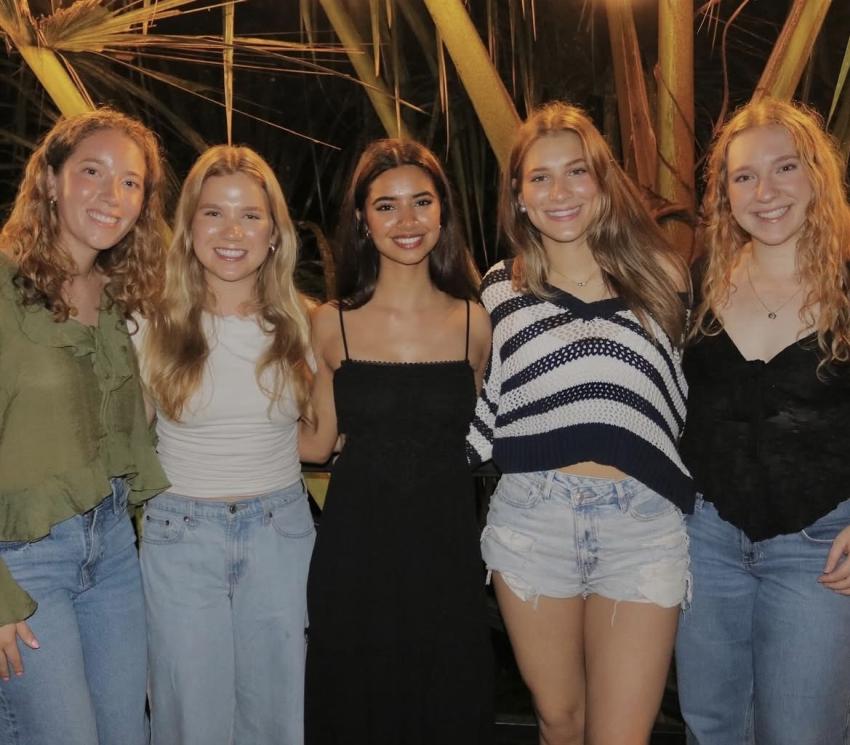
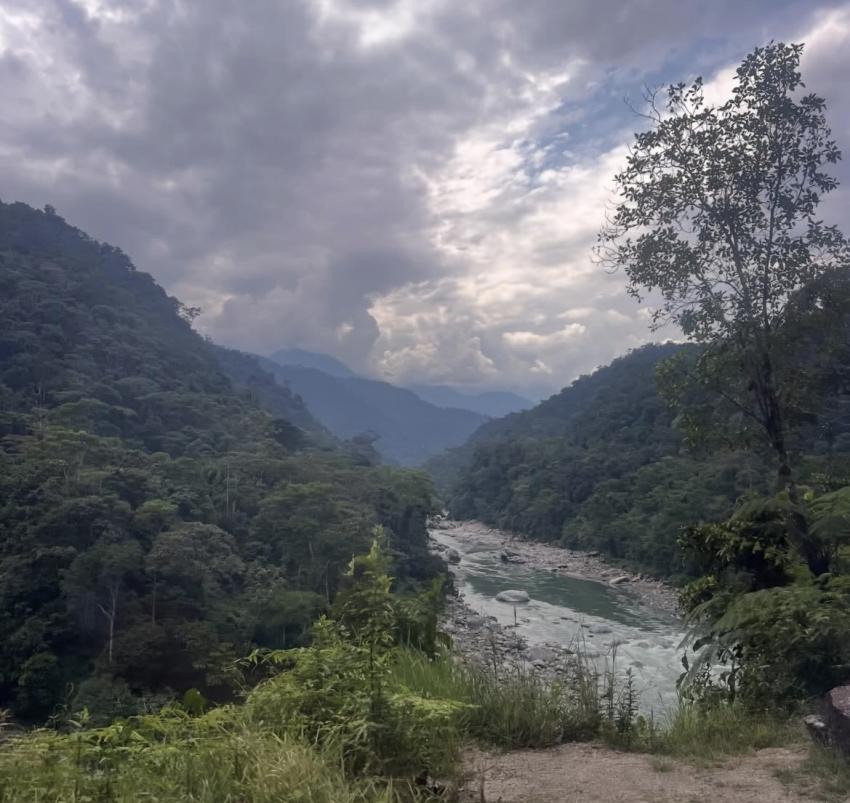
Shoulder to Shoulder allowed me to join faculty and students from UK on a trip to Tena, Ecuador, where we served four different indigenous and rural communities, impacting the lives of over 800 patients over the course of four clinic days. Tena is located in the Amazon rainforest, about 120 miles from Quito, the country’s capital.
There, I witnessed the effectiveness of interprofessional collaboration, especially in a setting where resources were limited and all our patients spoke a different language. I was able to work alongside professionals from UK, the University of New Mexico, and Ecuadorian physicians. Their passion for global health and providing care to underserved communities was inspirational and confirmed my long-term goal of becoming a Physician Assistant.
I observed how the environment you live in truly impacts your overall health and access to healthcare. Most patients did not have access to clean water, electricity, or transportation, making it extremely difficult for them to receive adequate or timely care. Despite this, I was amazed how resilient the people of this region were and how grateful they were to receive our care.
My first clinic day I worked with two Ecuadorian physicians as a scribe. I had never worked as a medical scribe and didn’t know what our day would hold. I was nervous, excited and full of anticipation for the day. When our bus arrived at the first community, I was surprised to find music playing, kids running around and playing, and patients already waiting for us to set up.
Right away I felt the intensity of the sun and the humid, stagnant air. Our “office” for the day was set up in a classroom; the room was yellow with children’s art covering the walls. We sat at a children’s desk, which was too small for our adult bodies, but we made it work.
There was a suitcase full of medical supplies, and one of the physicians said to me, “Wow, we get all of this?” He told me that the brigades he had been on typically didn’t receive this much. I was taken aback, because I thought our supplies were already limited, since we were constrained by what we could fly with. However, he was right, it was enough. I was shocked by how much we could accomplish with what we had.
With limited resources, our providers were forced to use their heads and their hands to treat patients. It was admirable to watch them use the wealth of their knowledge and to work with one another to care for the patient in front of them.
On the second clinic day I was able to work with a pediatric physician as a scribe. Each “office” for the day was separated by green tarps, often blowing up with the wind and not maintaining much patient privacy.
We were accompanied by a lizard who hung out on one of the doctors’ backpacks for the whole day. A large part of the floor was covered in water with a layer of grime making it quite slippery. It was common for dogs to wander in and out of our patient rooms.
But despite the environment we were working in, we were still able to care for children, whether it was by treating them for a parasitic infection or by simply giving them a sticker. In fact, I never knew how much of an impact stickers or bubbles could have on one child.
At one point during the day, I had five kids around me, running and chasing the bubbles I blew for them. Their laughter and youthful energy they brought to the clinic was contagious. They didn’t care about the conditions of the clinic or their diagnosis or medications they might have to take. They were just being children, playful and joyous despite their circumstances.
It made my heart happy.
On one of our last days, we visited a place called Laguna Azul. It was located about an hour from Tena, and it was one of the most beautiful, serene places I have ever seen.
I sat on a hammock and looked over a stream that flowed into a waterfall, surrounded by the lush jungle. After the busy, long, and sometimes chaotic clinic days, I finally felt the quiet set in.
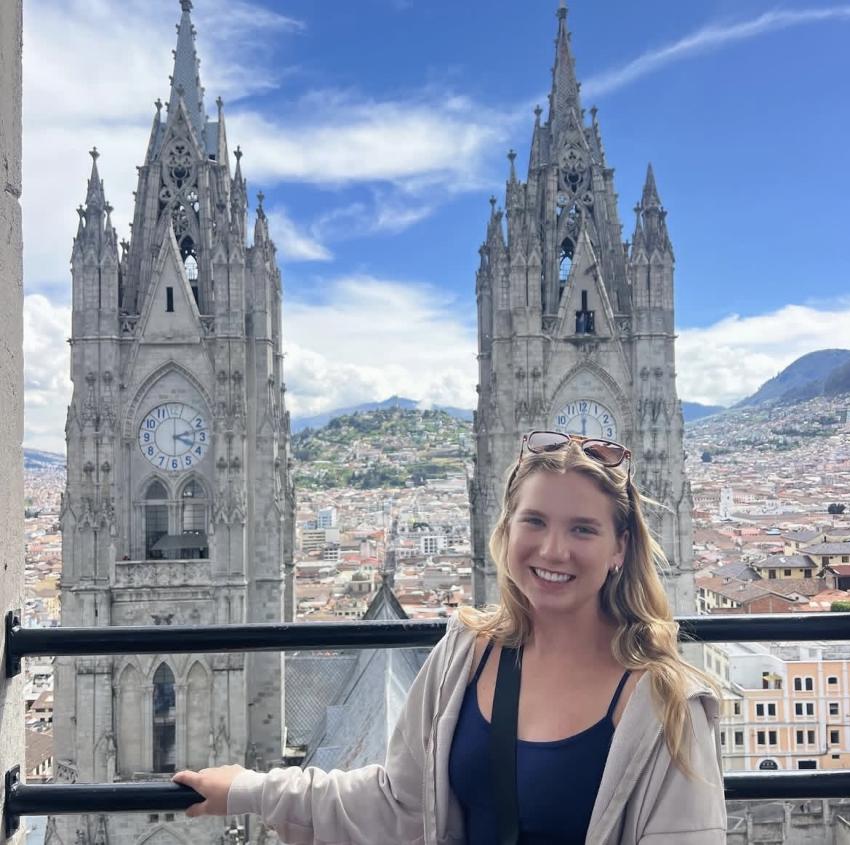
I felt the weight of what I had seen over the past few days — the patient stories, the culture of the communities, the providers I was able to work with and learn from. In that moment, I felt an immense sense of gratitude to be where I was and to have met the people I met.
This trip gave me new friendships within the College of Health Sciences, with students I’d never met until we went to Ecuador, as well as with those new faces I met in-country.
Someday, I hope to make a return visit.
Want more information on Shoulder to Shoulder?
Visit https://international.uky.edu/ghi/shoulder-to-shoulder-global