Research Projects

Nothing About Us Without Us: Partnering with Persons with Aphasia to Increase Community Awareness
What was the purpose of the study?
-
People with aphasia participate less in activities they used to enjoy.
-
Many people with aphasia mainly leave home for medical appointments.
-
The study looked at how training can improve community knowledge about aphasia.
Who participated in the study?

- 59 students participated.
- 12 persons with aphasia participated.
- 148 community members completed a survey
What was the training?
- First-semester graduate students created an educational training about aphasia

What did the study find?
- Over half of participants said aphasia affects
- Speaking
- Understanding
- Reading
- Writing
- Persons with aphasia can improve long after the diagnosis
- People with aphasia can participate in healthcare decisions.
- 100% of community members know that aphasia DOES NOT IMPACT INTELLIGENCE.
-

What communication strategies were shown?
- Participants provided 25 communication strategies.
- The strategies included
- Speaking slowly
- Allowing wait time
- Using communication partners
- Longer conversations
- Using photos/visuals.
Why and how to publish aphasia-friendly research summaries
What was the study's purpose?
-

People with aphasia and families have difficulty finding information about aphasia treatment research.
- To provide information
- To provide resources
What are 3 accessible ways to show research:
-

Plain language summaries
- Video summaries
- Graphical summaries
What are plain language summaries?
- Using shorter sentences
- Including familiar words
- Highlighting the main message

What are video summaries?
- It is only a 2–5-minute video.
- This includes the key message of the research
What is a graphical summary?
- Looks like an infographic.
- Shows the message of the results
What were the study’s methods?
- The study identified 60 stroke rehabilitation journals.
- 43 journals published aphasia-friendly resources.
What were the findings?
- There is an importance in making research consumer-friendly.
- There are future directions for publishing research.
"Learning about aphasia from someone who lives with it”:
Aligning academic-based service-learning with life participation approach to aphasia
What was the purpose of the study?

- Educational training is beneficial for people with aphasia.
- Applying course content to enhance academic-based service learning.
- To provide resources.
Who participated in the study?
- 36 graduate students participated.
-
8 people with aphasia participated.

What was the procedure?
- Graduate students engaged in a collaborative training about aphasia.
- Each student group and one person with aphasia created a 20-30 minute presentation for community members.
- Students wrote a reflective essay.
- Students received a grade for completing surveys and writing 3 reflective essays.
What did the study find?
- Findings showed that students applied course content and gained knowledge about aphasia.
-
Individuals also gained empathy and awareness regarding aphasia.

"I changed a lot as a human” Implementation of LPAA
What was the purpose of the study?
- The study used prior research from persons with aphasia.
- The goal was to evaluate changes in their overall communication skills.
- Improve quality of life.
Who participated in the study?
-
8 persons with aphasia participated.

What was the procedure?
- 8 people with aphasia were in individual and group therapy across 2 semesters.
- Participants recorded their "communication confidence" in tests before and after the therapy.
- Data was collected.

What were the results of the assessments?
- A major change index was shown from 4 out of the 8 persons with aphasia.
What were the results from the focus groups?
- The focus group identified 86 different codes. This was broken down into 4 major themes:
- Personalization of Therapy
- Involvement
- The Person with Aphasia
- Outcomes of the Aphasia Lab
- Participants enjoyed interacting with other individuals.
Creation of Webpage

Current Undergraduate Students who assisted with webpage development include Bella Ross, Olivia Spotti, Reece Sears, Isabella Miller
Group Therapy Sessions
Group Therapy Sessions aim to create a natural communication environment for all to feel comfortable and confident sharing information.
Community Involvement

We invite community into the Aphasia Lab to share their resources, and we educate community members about aphasia. The goal is for individuals with aphasia to re-engage in the community.

Basil and his trainer Zinnah from Paws with Purpose visited the Aphasia Lab.
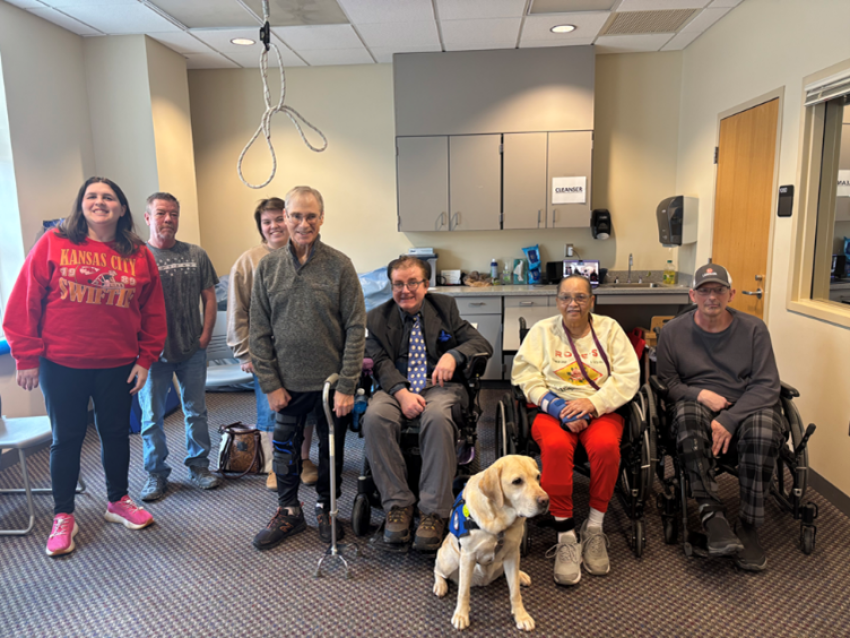
“We took a picture with Basil after she did her tricks”

“Guest speaker, Mr. Malone, shared facts about agriculture and brought a bull skull”

Painting with Dr. Winter Phong from UK College of Fine Arts

Savor the Flavor with Caroline McMahan from the UK Extension Office. Undergraduate students adapted the presentation to ensure it was Aphasia friendly.

Mr. Bill Bruening from UK Department of Plant and Soil Science shared seeds with us and cooked organic cookies.

Trip to Keeneland. Special thank you to Mr. and Mrs. Geon for providing an overview of Keeneland parking, seating, and much more. Keeneland was very accommodating and available to meet any of our needs.

