RHB Student Earns Pair of Prestigious Research Awards
Jul 20, 2026
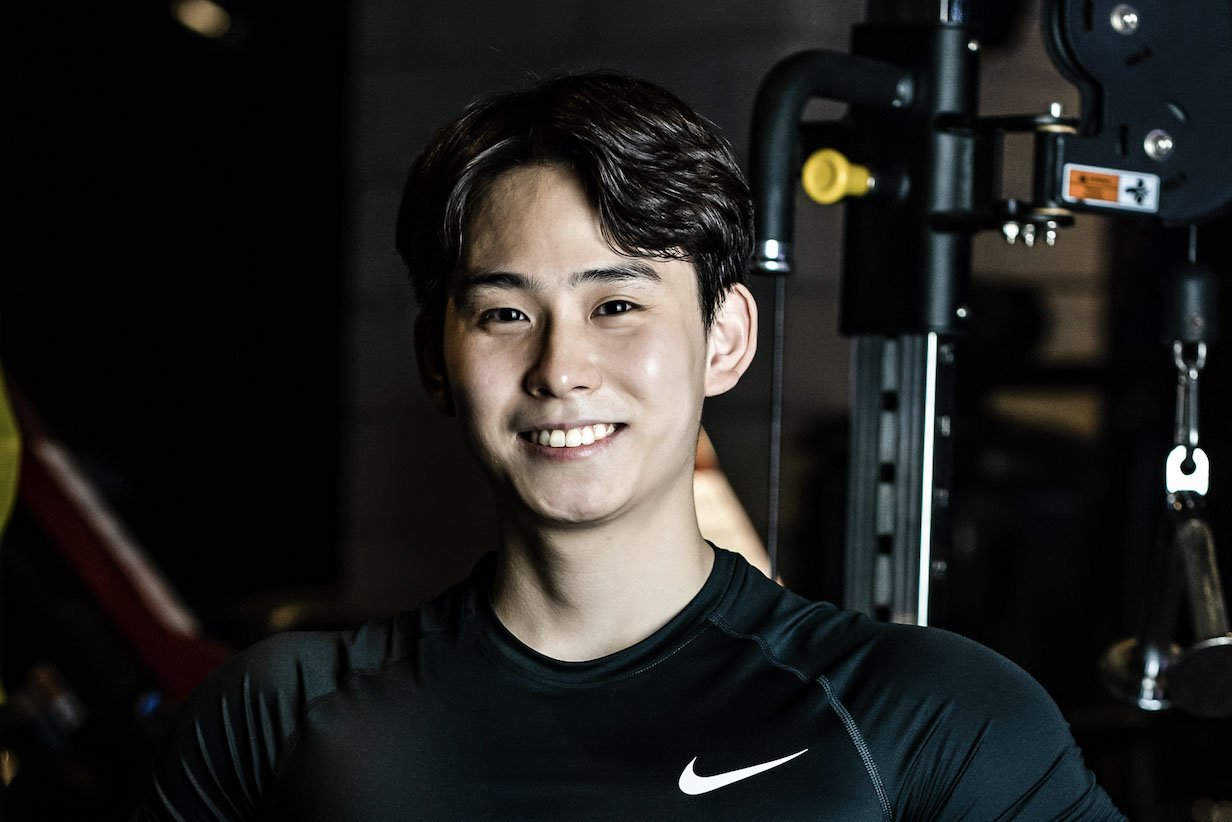
By Ryan Clark
CHS Communications Director
For Jiho Kang, a career dedicated to helping athletes recover from injury began with an injury of his own.
Now, the College of Health Sciences (CHS) doctoral student is being recognized for research that could one day help transform rehabilitation for patients with chronic ankle instability.
Kang, a student in the Rehabilitation and Health Sciences PhD Program (RHB) and a graduate research assistant in the Department of Athletic Training and Clinical Nutrition and the Sports Medicine Research Institute (SMRI), recently received two significant honors recognizing his work as an emerging researcher. He was selected to receive the College of Health Sciences Office of Research & Scholarship’s Emerging Scientist Grant and was also awarded the Southeast Athletic Trainers' Association (SEATA) Student Research Award.
The Emerging Scientist Grant supports outstanding early-stage doctoral students by providing one academic year of tuition funding along with a one-time $2,000 stipend for research supplies or travel. The SEATA Student Research Award comes with a $2,500 stipend and recognizes promising student-led research that advances the athletic training profession.
For Kang, the recognition represents an important milestone early in his doctoral career.
“These are the first grants I have received as a Ph.D. student, so it felt very meaningful and exciting,” Kang said. “Receiving the SEATA grant showed me that my research may have important implications for the athletic training profession and clinical practice. Receiving the Emerging Scientist Grant was also very encouraging because it made me feel that I am growing as an independent researcher. Both awards gave me confidence and motivation to continue developing my research ideas and contributing to the field of sports medicine and rehabilitation.”
Originally from South Korea, Kang’s passion for rehabilitation research grew from personal experience. A competitive swimmer, he was forced to retire after suffering a shoulder injury.
“That experience helped me understand how much injuries can affect athletes physically and mentally,” Kang said. “After that, I became interested in helping athletes recover from injuries and return to the activities they love. That is what led me to athletic training, rehabilitation and eventually rehabilitation and health sciences.”
His academic journey eventually led him to the University of Kentucky, where he found an ideal environment to pursue his research interests.
“Throughout my graduate studies in both South Korea and the United States, I continued to develop a strong interest in ankle injury research,” Kang said. “The University of Kentucky was a great fit for me because of the Sports Medicine Research Institute. SMRI conducts a wide range of sports medicine research and has an international reputation, especially in ankle injury research. I felt that the research environment, mentorship and expertise at UK aligned very well with my interests and long-term goals.”
Kang said the College of Health Sciences also offered the opportunity to bridge research with patient care.
“I wanted to conduct research that could directly contribute to clinical practice and improve patient care,” he said. “Because of that, the College of Health Sciences was the right place for me to continue developing as a researcher and clinician-scholar.”
His current research focuses on chronic ankle instability, a condition affecting individuals who continue to experience repeated ankle sprains or persistent feelings of instability following an initial injury.
Kang is investigating the biomechanical, clinical and neurological characteristics associated with the condition while exploring how machine learning and advanced data analysis can improve rehabilitation.
“My long-term goal is to use data-driven approaches to develop more personalized rehabilitation strategies that can improve prognosis and clinical outcomes,” he said. “Current ankle rehabilitation protocols often treat patients as a broad and somewhat heterogeneous group. I hope to better understand individual differences among patients so we can develop more personalized treatment approaches.”
As both a clinician and researcher, Kang believes innovation should always remain focused on improving patient outcomes.
“With the development of new technologies, equipment and data analysis methods, it is easy to focus on things that look innovative or impressive,” he said. “However, the more important question is whether those methods can actually help improve clinical outcomes.”
He encourages future researchers to keep patients at the center of their work.
“As health care providers and researchers, I believe we share the same goal: to help patients and athletes recover better and improve their quality of life,” Kang said. “Keeping that goal in mind is very important.”
Kang credits much of his success to the mentors and colleagues who have supported him throughout his academic career.
“I would like to thank my advisor, my committee members, my coworkers and everyone at SMRI for their continued support,” he said. “I am grateful to be surrounded by people who support my growth as a student, researcher and future health care professional.”