SMRI professor travels to Hong Kong to present on jockey health, performance
Jan 7, 2026
December trip highlights global collaboration on athlete safety and rehabilitation
By Ryan Clark
CHS Communications Director
A Sports Medicine Research Institute (SMRI) researcher and assistant professor in the College of Health Sciences (CHS) recently traveled to Hong Kong to present on topics focused on jockey health, safety and performance at an international conference drawing experts from around the world.
Michaela Keener, PhD researcher in SMRI and CHS assistant professor of Athletic Training and Clinical Nutrition, participated in the International Conference for the Health, Safety and Welfare of Jockeys in December. Keener was one of only two presenters from the United States at the event, which brought together researchers, clinicians and industry leaders representing countries including New Zealand, England, Ireland, Hong Kong and South Africa.
“It was a great opportunity to connect with other researchers, clinicians and organization officials from around the world to learn about the measures and procedures other countries are taking to help support jockeys,” Keener said.
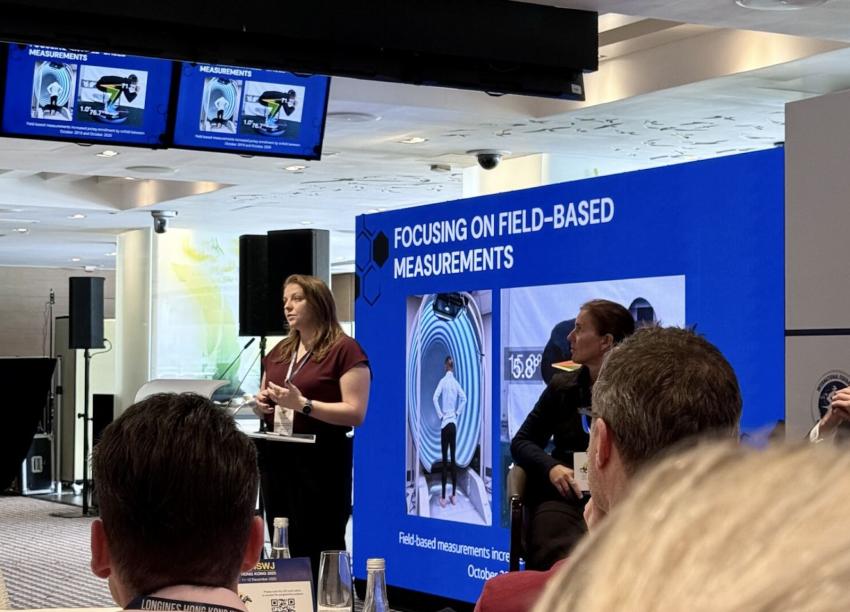
Keener took part in a panel discussion titled “Fit to Ride: Physical Preparation and Rehabilitation for Jockey Performance,” sharing insights alongside international experts on optimizing jockey readiness, recovery and long-term well-being. She also presented a research poster at the conference, as did College of Education PhD candidate Kelley Renner.
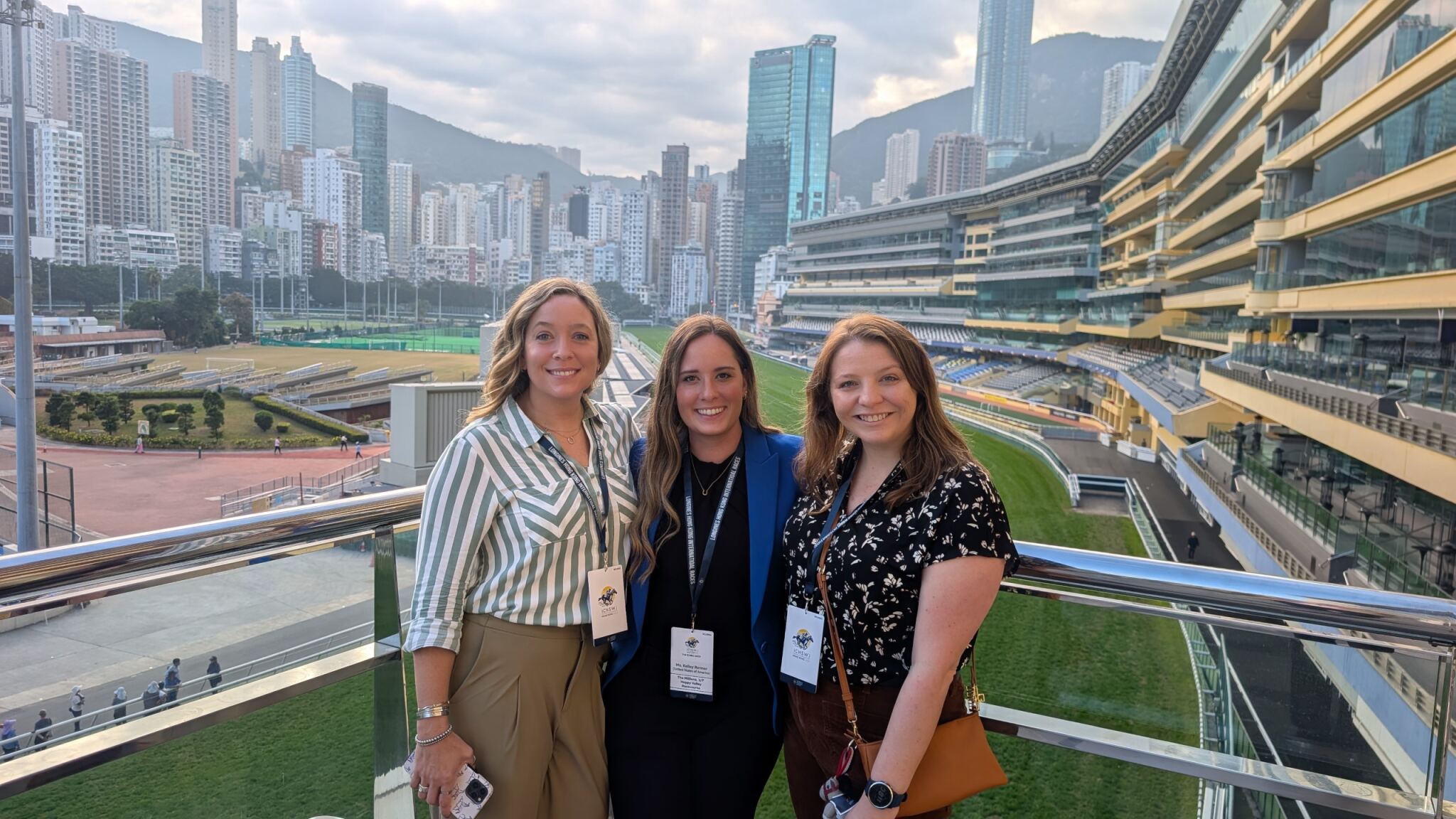
Joining Keener and Renner on the trip was Ashley Samson, PhD and professor in the Department of Kinesiology and Health Promotion in the College of Education.
Hosted by the Hong Kong Jockey Club, the conference offered attendees a firsthand look at one of the world’s most comprehensive and well-resourced racing operations.
“I had never been to Hong Kong before, and it was an incredible experience,” Keener said. “The Hong Kong Jockey Club, who hosted the event, went all out to ensure we experienced every aspect of their racing operation — races, morning exercise riding, the way they highlight jockeys as elite athletes, and how they handle emergency situations on the track.”
Keener said presenting research on an international stage was eye-opening.
“Presenting was exciting and a little surreal,” she said. “It was energizing to share our work on an international stage and to see genuine interest in what we’re doing in the U.S. Hearing about how other countries support their jockeys was both fascinating and, at times, overwhelming. Many have large research and clinical teams that support jockeys from the start of their careers through retirement and career transition, whereas we’re working with a much smaller team.”
The experience also opened the door for future collaboration and growth within Keener’s research program.
“Discussing potential collaborations and receiving encouragement from international research groups was incredibly motivating,” she said. “It’s already sparked a lot of conversations with our team back in the U.S. about next steps, which is always exciting.”
Keener said the trip reinforced the importance of the work being done through the Equestrian Athlete Program and its mission to advance jockey health and safety.
“Overall, the experience had a big impact on me,” she said. “It was inspiring, perspective-shifting, and a powerful reminder of why I’m passionate about this research and the work the Equestrian Athlete Program is doing to support our race riders.”
